Purpose and use case
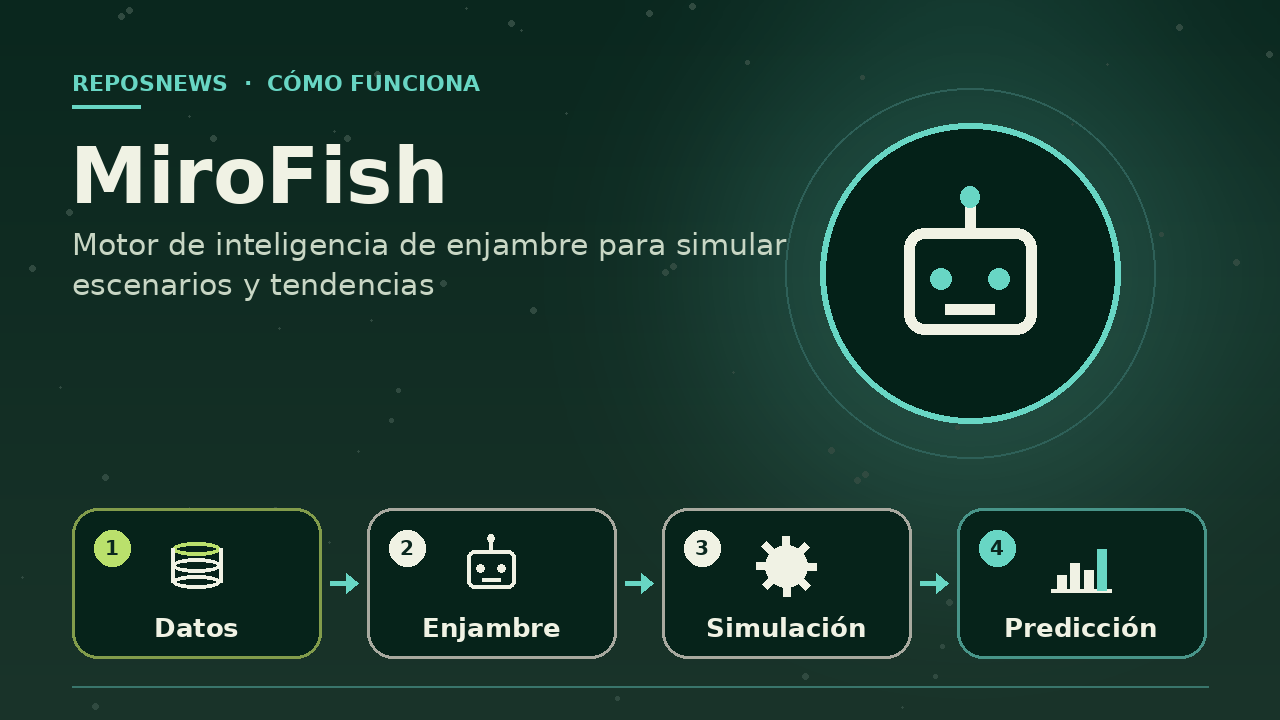
The purpose of this guide is to help you set up the MiroFish simulation engine in your terminal for the first time to predict alternative futures or test social scenarios. A concrete use case is analyzing news or reports to generate a digital environment where thousands of intelligent agents interact, allowing you to observe potential outcomes of policies or public opinion dynamics.
When to use it
Use this tool when you need to process source material, such as policy drafts or analytical reports, and want to run multi-agent simulations to study emergent social interactions or deduce future trajectories.
What you need
To complete this local installation, you will need Node.js version 18 or higher, Python version 3.11 up to 3.12, the uv package manager, an LLM API key compatible with the OpenAI SDK, and a Zep Cloud API key.
Where to get it
The official project repository is hosted on GitHub at https://github.com/666ghj/MiroFish.
Installation
Open your terminal on your computer and follow these local setup steps:
cp .env.example .envThis command copies the example configuration file so you can edit it and add your API keys in your system terminal.
npm run setup:allThis command automatically installs all required dependencies for the root directory, frontend, and backend in your terminal.
First use
Once dependencies are installed, start the services by running the following command from the project root in your terminal:
npm run devThis command simultaneously launches the frontend server at http://localhost:3000 and the backend API at http://localhost:5001.
Limitations and licensing
Large-scale simulations can consume significant LLM resources, so it is recommended to start with fewer simulation rounds. The project is distributed under the AGPL-3.0 license. Verified pricing is unavailable in the official documentation because the software is open-source and relies on external API provider costs.
What the Reel shows
MiroFish UI screenshots displaying an entity relationship graph, the public repository interface, and a PDF report-based simulation interface.
MiroFish allows modeling and simulating complex public opinion relationships in real time using agent graphs.
Reel claims are distinguished from facts checked against the official article sources.
Sources and methodology
Official sources checked on the stated date. We do not claim growth without historical data or installations that have not been run.
https://github.com/666ghj/MiroFish